
Last Updated: June 2026 | Reading Time: 9 minutes
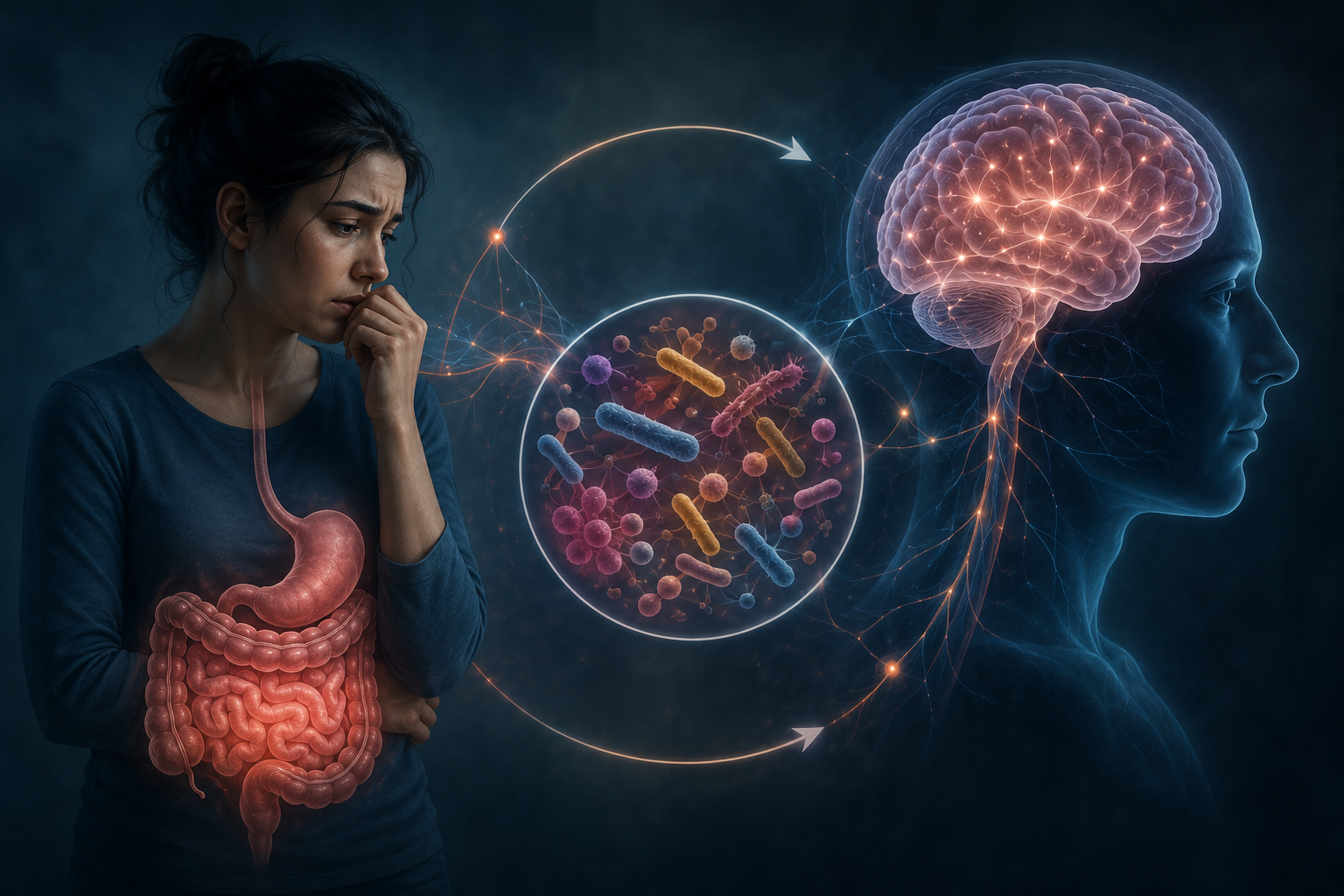
The connection between your digestive system and your mental state is no longer speculative. Over the past decade, researchers have mapped a direct communication pathway between the gut and the brain, commonly called the gut-brain axis. This bidirectional network involves the vagus nerve, the enteric nervous system, immune signaling, and the trillions of microorganisms living in your intestines. What happens in your gut does not stay in your gut. It influences mood, cognition, and particularly anxiety.
Understanding this relationship opens practical avenues for managing anxiety that extend beyond traditional talk therapy and medication. This article examines the mechanisms, the evidence, and the actionable steps you can take.
What Is the Gut-Brain Axis
The gut-brain axis is a complex signaling system connecting the gastrointestinal tract and the central nervous system. It operates through multiple channels:
- The Vagus Nerve: The primary parasympathetic communication line between the gut and the brain. It transmits signals in both directions and plays a critical role in regulating stress responses.
- The Enteric Nervous System: Often called the “second brain,” this network of neurons embedded in the gut wall can function independently and influences emotional states.
- Neurotransmitter Production: The gut microbiome produces approximately 90% of the body’s serotonin, along with gamma-aminobutyric acid (GABA) and dopamine.
- Immune and Inflammatory Pathways: Gut bacteria regulate systemic inflammation. Elevated inflammatory markers are consistently associated with anxiety disorders.
When this axis is disrupted, the consequences extend to mental health in measurable ways.
How Gut Dysbiosis Contributes to Anxiety
Gut dysbiosis refers to an imbalance in the microbial community, typically characterized by reduced diversity and overgrowth of harmful species. This condition triggers several anxiety-promoting mechanisms:
Increased Intestinal Permeability
Commonly known as “leaky gut,” increased permeability allows bacterial endotoxins and undigested food particles to pass into the bloodstream. This triggers immune responses and low-grade systemic inflammation. A 2017 study in Neuropsychopharmacology found that elevated levels of circulating lipopolysaccharides (LPS) correlated with higher anxiety scores and altered activity in the amygdala, the brain’s fear-processing center.
Neurotransmitter Disruption
Specific bacterial strains synthesize neurotransmitters directly. Lactobacillus and Bifidobacterium species produce GABA, the primary inhibitory neurotransmitter that reduces neuronal excitability. Reduced populations of these bacteria may lower GABA availability, increasing baseline anxiety. Similarly, serotonin synthesis depends on adequate levels of tryptophan, an amino acid whose metabolism is heavily influenced by gut bacteria.
HPA Axis Dysregulation
The hypothalamic-pituitary-adrenal (HPA) axis governs the body’s stress response. Gut microbiota modulate HPA axis sensitivity. Animal studies demonstrate that germ-free mice exhibit exaggerated cortisol responses to stress. Reintroducing specific bacterial strains normalizes this response. In humans, chronic stress alters gut microbiome composition, which in turn amplifies HPA axis reactivity, creating a self-perpetuating anxiety loop.
Clinical Evidence: Probiotics and Anxiety Reduction
Randomized controlled trials provide direct evidence for the gut-anxiety connection. A landmark meta-analysis published in Psychiatry Research in 2023 synthesized data from 34 trials and found that probiotic supplementation significantly reduced anxiety symptoms compared to placebo, with effects most pronounced in participants with baseline anxiety disorders.
Notable findings include the following:
- Lactobacillus rhamnosus JB-1 reduced stress-induced corticosterone and anxiety-related behavior in animal models, with human trials showing decreased subjective anxiety scores.
- Bifidobacterium longum 1714 demonstrated measurable reductions in cortisol awakening response and improved stress coping in healthy adults.
- Multi-strain formulations containing at least 10 billion CFU showed superior outcomes compared to single-strain supplements.
The effect size is moderate, comparable to some pharmacological interventions for mild anxiety, but without the side effect profile of traditional anxiolytics.
Dietary Patterns That Shape the Gut-Brain Relationship
What you eat determines which bacteria thrive. Dietary choices are the most controllable variable in gut health optimization.
Fiber and Prebiotics
Dietary fiber, particularly from diverse plant sources, feeds beneficial bacteria. These bacteria ferment fiber into short-chain fatty acids (SCFAs), including butyrate, propionate, and acetate. Butyrate strengthens the intestinal barrier, reduces inflammation, and crosses the blood-brain barrier to influence neuroplasticity. Aim for 30 distinct plant foods weekly, including vegetables, fruits, legumes, whole grains, nuts, and seeds.
Fermented Foods
Fermented foods deliver live bacteria directly to the gut. Kimchi, sauerkraut, kefir, yogurt, and miso contain diverse microbial communities. A 2021 study at Stanford University found that a 10-week diet high in fermented foods increased microbiome diversity and decreased inflammatory markers more effectively than a high-fiber diet alone, though both approaches outperformed standard American dietary patterns.
Omega-3 Fatty Acids
Found in fatty fish, walnuts, and flaxseed, omega-3s support both gut barrier integrity and neuronal membrane fluidity. They reduce gut permeability and have independent anti-anxiety effects through modulation of inflammatory cytokines and neurotransmitter receptor function.
Limiting Gut-Damaging Factors
Alcohol, artificial sweeteners, ultra-processed foods, and chronic antibiotic use disrupt microbiome balance. Non-steroidal anti-inflammatory drugs (NSAIDs) also compromise intestinal permeability when used regularly. Moderation and targeted use, rather than elimination, are practical goals.
The Role of Vagus Nerve Stimulation
Because the vagus nerve is the primary gut-brain communication channel, stimulating it can modulate anxiety. Noninvasive techniques include the following:
- Diaphragmatic breathing: Slow, deep breathing at 5-6 breaths per minute activates vagal tone. Practice for 10 minutes daily.
- Cold exposure: Brief cold water immersion on the face or cold showers trigger the mammalian dive reflex, increasing parasympathetic activity.
- Gargling and humming: These actions mechanically stimulate vagus nerve branches in the throat.
These techniques do not replace gut health optimization but complement it by strengthening the communication pathway itself.
Practical Implementation: A 4-Week Protocol
Changing gut microbiome composition takes time. Bacterial turnover occurs over weeks, not days. A structured approach yields better adherence than scattered efforts.
Week 1: Audit your current diet. Log every food for seven days. Identify your plant food diversity count and fermented food frequency. Eliminate artificial sweeteners and reduce alcohol to two servings maximum.
Week 2: Introduce one fermented food serving daily. Add a high-quality multi-strain probiotic containing at least 10 billion CFU, taken with breakfast. Begin daily diaphragmatic breathing practice.
Week 3: Increase fiber intake gradually to 30-40 grams daily to avoid bloating. Introduce two new plant foods you do not typically eat. Continue probiotic and breathing protocols.
Week 4: Assess subjective anxiety levels using a standard scale such as the GAD-7. Note any changes in digestion, sleep, or energy. Adjust fiber sources based on tolerance. Consider maintaining the probiotic long-term if benefits are observed.
Individual Variability and Realistic Expectations
Gut microbiome composition is highly individual, influenced by genetics, birth method, early life antibiotic exposure, geography, and lifelong diet. What works for one person may not work identically for another. Probiotic research shows responder and non-responder patterns. Some individuals experience noticeable anxiety reduction within three weeks. Others require two to three months. A subset may see minimal change.
This variability does not invalidate the gut-brain connection. It reflects biological complexity. Consistency and patience are essential. Track outcomes objectively rather than relying on daily subjective impressions.
When to Integrate With Professional Care
Gut health optimization is a valuable adjunct, not a replacement, for clinical treatment of anxiety disorders. If you experience panic attacks, severe avoidance behaviors, or functional impairment, consult a mental health professional. Psychotherapy, particularly CBT, and medication when indicated, remain first-line treatments for moderate-to-severe anxiety. Gut health strategies enhance outcomes and may reduce medication requirements, but they should not delay appropriate care.
Related Articles
- Cognitive Behavioral Techniques You Can Practice Daily
- Digital Detox Strategies for Chronic Overthinkers
- Mindfulness Practices Backed by Neuroscience Research
- How Social Media Algorithms Affect Your Mood Patterns
- Sleep Hygiene’s Direct Impact on Emotional Regulation
- Journaling Methods That Reduce Stress Hormone Levels
- Boundary Setting: Protecting Mental Energy in Relationships
- Circadian Rhythm Hacking for Better Deep Sleep Cycles
References and Sources
- Cryan, J. F., & Dinan, T. G. (2012). Mind-altering microorganisms: the impact of the gut microbiota on the brain and behavior. Nature Reviews Neuroscience, 13(10), 701-712. https://doi.org/10.1038/nrn3346
- Foster, J. A., & McVey Neufeld, K. A. (2013). Gut-brain axis: how the microbiome influences anxiety and depression. Trends in Neurosciences, 36(5), 305-312. https://doi.org/10.1016/j.tins.2013.01.005
- Rea, K., Dinan, T. G., & Cryan, J. F. (2016). The microbiome: A key regulator of stress and neuroinflammation. Neurobiology of Stress, 4, 23-33.
- Mayer, E. A. (2011). Gut feelings: the emerging biology of gut-brain communication. Nature Reviews Neuroscience, 12(8), 453-466.
- Wanchun, L., et al. (2023). The efficacy of probiotics on anxiety: A meta-analysis of randomized controlled trials. Psychiatry Research, 320, 115034.
- Bravo, J. A., et al. (2011). Ingestion of Lactobacillus strain regulates emotional behavior and central GABA receptor expression in a mouse via the vagus nerve. Proceedings of the National Academy of Sciences, 108(38), 16050-16055.
- Wastyk, H. C., et al. (2021). Gut-microbiota-targeted diets modulate human immune status. Cell, 184(16), 4137-4153.
- American Psychological Association. (2024). Gut Health and Mental Health: What the Research Shows. https://www.apa.org/topics/stress/gut-health
Medical Disclaimer: This article is for informational purposes only and does not constitute medical advice. Consult a qualified healthcare provider before making significant dietary changes or starting supplements, especially if you have existing health conditions.

Ethan Caldwell is a wellness technology researcher and lifestyle writer focused on the intersection of health, innovation, and everyday wellbeing. He specializes in topics such as fitness technology, sleep optimization, AI-powered nutrition, workplace wellness, and mental health strategies. Through extensive research and analysis of emerging health trends, Ethan creates practical, easy-to-understand content designed to help readers make informed decisions and build healthier daily habits. His goal is to translate complex wellness concepts into actionable guidance for modern living.