
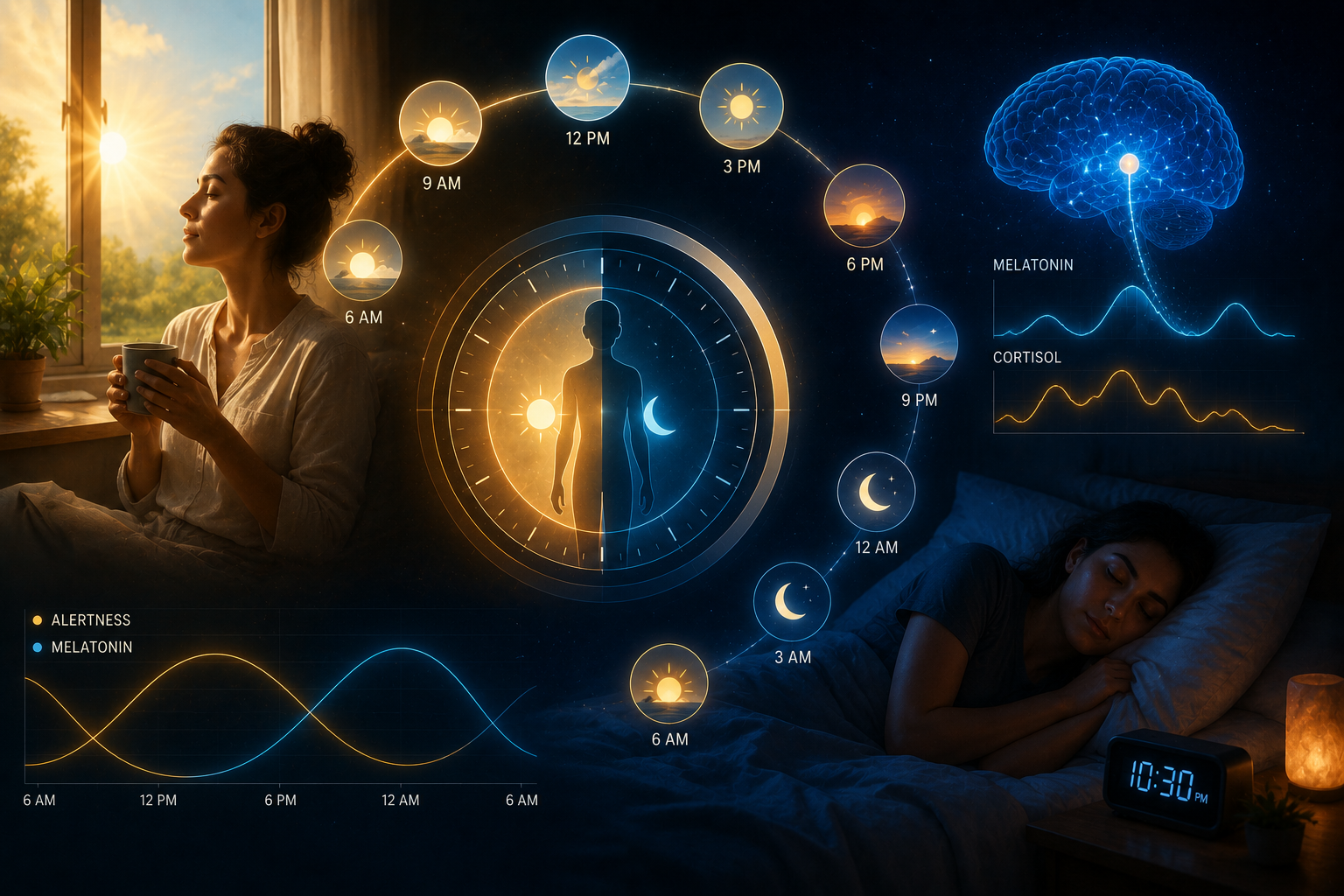
Focusing solely on the amount of time spent in bed is something that many people attempt to change to get better sleep. Timing is just as crucial as sleep duration, which is frequently disregarded. Sleeping is not the same as turning off your body and then turning it back on again in the morning. It is governed by an internal clock that controls your arousal, sleep-wake cycles, and other physiological processes.
The term for this internal mechanism is the circadian rhythm. Like a biological clock, it regulates when we sleep, how attentive we are, how hot we get, and what hormones we produce. Problems with falling asleep, staying asleep, or feeling refreshed after a good night’s sleep could result from disruptions to this cycle.
Fortunately, your everyday routine can modify your biological clock. You may improve the quality of your sleep by making adjustments to your environment that take into account the effects of light, food, activity, and routine on your circadian rhythm. Learn the ins and outs of the circadian rhythm, the factors that influence it, the most typical blunders that throw it off, and practical tips for beginners to establish a better sleep routine for more regular deep sleep cycles in this comprehensive book.
Understanding Your Circadian Rhythm
Your circadian rhythm is a natural 24-hour cycle that helps your body organize important functions throughout the day. It influences your sleep and wake patterns, but it also affects other processes such as body temperature changes, hormone activity, and daily energy levels.
The main control center for this rhythm is located in the brain. It receives signals from the environment, especially light, and uses them to help determine when your body should become more alert and when it should prepare for rest. A simple way to consider the circadian rhythm is as your body’s internal schedule. When your daily habits match this schedule, sleep often becomes easier. Your body may struggle to know when it should be awake or asleep if your habits constantly send mixed signals.
Why Timing Matters
Two people may sleep the same number of hours but feel entirely different the next day. One reason can be the timing and quality of their sleep. A regular schedule that matches your natural rhythm can help your body move through sleep cycles more effectively. Circadian rhythm support is not about forcing yourself into an unrealistic schedule. It is about creating consistent signals that help your body understand when it is time for activity and when it is time to rest.
How Deep Sleep Cycles Work
Sleep is not one continuous state. During the night, your body moves through different sleep stages that repeat in cycles. Each stage has a different role in helping the body and brain recover.
| Sleep Stage | Main Function |
|---|---|
| Light sleep | Helps the body transition into deeper sleep |
| Deep sleep | Supports physical recovery and restoration |
| REM sleep | Associated with learning, memory, and emotional processing |
Deep sleep is often considered one of the most important parts of the sleep cycle because it is a period when the body performs many recovery processes. However, getting more deep sleep is not simply about staying in bed longer.
Factors That Influence Deep Sleep
- Consistent sleep timing
- Stress levels
- Sleep environment
- Daily activity patterns
- Age and individual differences
A person who sleeps at inconsistent times may experience greater difficulty maintaining it harder to maintain a predictable sleep pattern. Supporting the circadian rhythm can create a better foundation for healthy sleep cycles.
The Connection Between Circadian Rhythm and Deep Sleep
Circadian rhythm and sleep cycles work together. Your body uses internal timing signals to prepare for sleep, maintain sleep, and support waking energy. When your body clock is aligned with your daily schedule, sleep patterns often become more predictable. One important signal is darkness. As evening arrives, the body naturally begins preparing for sleep. Exposure to light, especially bright light at the wrong time, can influence these signals and affect when your body is ready to rest.
| Healthy Circadian Signals | Disrupted Circadian Signals |
|---|---|
| Regular wake time | Different wake times every day |
| Morning light exposure | Limited daytime light |
| Relaxing evening routine | Late-night stimulation |
| Balanced daily activity | Irregular lifestyle patterns |
Improving your circadian rhythm does not guarantee perfect sleep every night, but it can create a stronger foundation for consistent rest.
Common Things That Disrupt Your Body Clock
Modern lifestyles often create situations where natural sleep timing becomes difficult. Artificial lighting, changing work schedules, late-night entertainment, and irregular routines can all send confusing signals to your internal clock.
- Irregular Sleep Times
- Too Little Daytime Light
- Late-Night Stimulation
Why Morning Light Is Important
Light is one of the strongest environmental signals that influences the circadian rhythm. Morning light exposure helps your body understand that a new day has started and supports the timing of your sleep-wake cycle. Many people focus only on reducing light before bed, but getting enough light during the day is also important. Your body clock responds to the difference between daytime brightness and nighttime darkness.
Simple Ways to Use Morning Light
- Open curtains after waking.
- Spend time near natural light when possible.
- Take a short walk outdoors during the morning.
- Avoid staying in dark environments all day.
Morning light does not need to become a complicated routine. Even small changes that increase daytime light exposure can provide stronger signals for your internal clock.
Creating an Evening Routine That Supports Sleep
A healthy circadian rhythm depends on both morning events and evening signals to your body. Your brain needs a transition period between daytime activity and nighttime rest. Without this transition, many people find it difficult to relax even when they are physically exhausted. An effective evening routine does not need to be complicated. The goal is to create repeated habits that tell your body it is approaching bedtime. Over time, these consistent signals can help your brain recognize when it is time to slow down.
| Evening Habit | Why It May Help |
|---|---|
| Lowering bright lights | Creates a calmer environment before sleep |
| Relaxing activities | Helps the mind transition away from daily stress |
| Consistent bedtime routine | Creates predictable sleep signals |
| Preparing for tomorrow | Reduces bedtime worries about unfinished tasks |
Examples of a Simple Wind-Down Routine
- Finish demanding tasks earlier in the evening when possible.
- Reduce unnecessary notifications and distractions.
- Prepare clothing or tasks for the next day.
- Choose calm activities before sleeping.
The purpose of an evening routine is not perfection. Missing a routine occasionally is normal. The benefit comes from creating a pattern that your body begins to recognize.
How Technology Affects Your Sleep Timing
Technology has changed how people spend their evenings. Smartphones, computers, televisions, and other devices provide entertainment, communication, and useful tools. However, how people use technology can influence their sleep habits. The main concern is not simply that screens exist. The timing, brightness, and type of activity matter. A relaxing activity on a device may affect people differently than an intense conversation, competitive game, or stressful news session.
| Technology Habit | Possible Sleep Impact |
|---|---|
| Checking stressful information late at night | May increase mental activity |
| Using devices in bed for long periods | Can weaken the connection between bed and sleep |
| Bright screen exposure late at night | May affect natural sleep signals |
| Using calming settings | May create a more comfortable experience |
Creating Better Technology Habits
Instead of completely removing technology, focus on using it intentionally. Simple changes, such as reducing stimulating activities before bed or creating device-free periods, may help support a healthier sleep routine.
How Food and Caffeine Timing Influence Sleep
Daily eating habits can also affect your circadian rhythm and sleep quality. The body follows regular patterns for digestion, energy use, and rest. Large changes in meal timing may influence how prepared your body feels for sleep. Eating a heavy meal immediately before bed may make some people uncomfortable, while others may have no noticeable effect. Personal response varies, but paying attention to timing can help identify habits that affect your sleep.
Caffeine Timing Mistakes
Many people only think about caffeine when they drink coffee, but caffeine can also appear in tea, energy drinks, chocolate, and some supplements. Because people process caffeine differently, there is no single cutoff time that works for everyone. A practical approach is noticing how your caffeine habits affect your ability to fall asleep and adjusting your routine if needed.
Exercise Timing and Your Body Clock
Physical activity is generally considered an important part of a healthy lifestyle, and the timing of that activity can influence how some people feel throughout the day. Exercise can increase alertness and energy, which is often useful during daytime hours. For some individuals, intense activity very close to bedtime may feel stimulating, while others may not notice a problem.
| Exercise Timing | Possible Experience |
|---|---|
| Morning exercise | May support daytime alertness |
| Afternoon activity | Fits naturally into many schedules |
| Late intense workouts | May feel stimulating for some people |
Finding Your Best Timing
There is no universal perfect workout time. The best choice depends on your schedule, energy levels, and how your body responds. The most important factor is maintaining regular physical activity rather than searching for a perfect time.
How to Reset an Irregular Sleep Schedule
A disrupted sleep schedule can happen because of travel, shift work, busy periods, late-night habits, or lifestyle changes. Trying to change everything overnight often leads to frustration. A gradual adjustment is usually easier for many people to maintain.
A Simple 7-Day Circadian Reset Approach
| Day | Focus |
|---|---|
| Day 1–2 | Choose a consistent wake-up time |
| Day 3–4 | Add more morning light exposure |
| Day 5–6 | Create a calmer evening routine |
| Day 7 | Review what habits improve your sleep |
The wake-up time is often one of the most useful anchors because it helps create consistency. Even if bedtime changes temporarily, maintaining a regular morning schedule can provide stronger signals for your body clock.
Common Reset Mistakes
- Changing bedtime too aggressively.
- Sleeping much longer after a poor night.
- Ignoring daytime light exposure.
- Expecting immediate results.
Common Circadian Rhythm Mistakes
Many people unintentionally create habits that confuse their internal clock. These mistakes are common because they fit easily into modern lifestyles.
| Mistake | Better Approach |
|---|---|
| Sleeping and waking at different times every day | Create more consistent timing |
| Spending all day indoors | Add natural light exposure when possible |
| Using weekends to completely change schedule | Keep changes moderate |
| Focusing only on bedtime | Improve the entire daily routine |
A strong circadian rhythm is built through repeated daily signals. Small habits repeated consistently often matter more than occasional major changes.
FAQs
1. What is the best strategy to support my circadian rhythm?
One simple thing is to wake up at the same time each day. Also, exposure to early light and developing a more relaxing evening routine might provide useful cues to your biological clock. Such modifications are usually easier to keep if presented progressively.
2. Is there a way to fix my sleep routine in one night?
Most can’t totally change their sleep timing overnight. The internal clock of the body changes slowly, and it is usually more realistic to make regular alterations over several days. Small, frequent improvements can result in healthier long-term habits.
3. Does longer sleep always mean more deep sleep?
Not necessarily. More time in bed doesn’t necessarily equal better-quality sleep. The time you go to bed is just one factor that influences your sleep cycles. Consistency, surroundings, and daily routines are also influential.
4. So is blue light the only reason screens disrupt sleep?
No. Screen brightness is one factor, but so is how much stuff you consume and how involved you get. Even with the brightness of your screen down, a tense discussion or thrilling activity can keep your mind alive.
5. How long does it take to restore an interrupted sleep routine back on track?
The timeline depends on how far off your existing schedule is from the planned routine. Some people experience these changes fast; others take longer. Consistency is frequently more crucial than making swift changes.
6. Can my sleep routine impact my energy during the day?
Yes. Your circadian rhythm tells your body when it should be awake and when it should begin to wind down. Finding a routine that matches your internal clock can contribute to more constant energy throughout the day.
7. Do we all have to have the same sleep routine?
No. People have varied schedules, different obligations, and different natural inclinations. It’s not about mimicking someone else’s pattern; it’s about discovering routines that suit your sleep demands and lifestyle.
Conclusion
Hacking your circadian rhythm is not about complex tactics or forcing your body to do abnormal things. It’s about understanding what cues affect your internal clock and developing regular practices to help you sleep better at the right times.
Using morning light, consistent waking times, balanced routines, mindful use of technology, and a calm evening atmosphere can all help with improved sleep patterns. These behaviors may look basic, but the value is in the consistency of repeating them. There’s no one answer that’s right for everyone when it comes to deep sleep; there are a lot of things involved. Looking at your personal habits and making small changes might help build a better foundation for more pleasant and consistent sleep.
References
- National Institutes of Health (NIH) – Sleep and Circadian Rhythm Research Resources.
- Centers for Disease Control and Prevention (CDC) – Sleep Health Information.
- National Sleep Foundation – Sleep Education and Circadian Rhythm Resources.
- American Academy of Sleep Medicine (AASM) – Sleep Health Guidelines.

Ethan Caldwell is a wellness technology researcher and lifestyle writer focused on the intersection of health, innovation, and everyday wellbeing. He specializes in topics such as fitness technology, sleep optimization, AI-powered nutrition, workplace wellness, and mental health strategies. Through extensive research and analysis of emerging health trends, Ethan creates practical, easy-to-understand content designed to help readers make informed decisions and build healthier daily habits. His goal is to translate complex wellness concepts into actionable guidance for modern living.