
Last Updated: June 2026 | Reading Time: 9 minutes
Blue light has become the villain of modern sleep hygiene. Glasses, screen filters, and device settings promise to block its harmful effects. Yet much of what is marketed about blue light is oversimplified or outright incorrect. The real impact of blue light on sleep and circadian rhythms is measurable, context-dependent, and far more nuanced than popular narratives suggest. This article examines what the research actually shows, what remains uncertain, and how to apply the evidence without falling for commercial mythology.
Core Principle: Blue light is not inherently harmful. It is a powerful circadian signal that becomes disruptive when delivered at the wrong time, in the wrong intensity, or in the wrong context. The goal is not elimination but strategic management.
The Photobiology of Blue Light
Blue light refers to the portion of the visible spectrum with wavelengths between 400 and 495 nanometers, with peak circadian sensitivity at approximately 480 nm. This light is detected not by the rods and cones responsible for vision but by specialized retinal ganglion cells containing melanopsin, a photopigment that directly signals the suprachiasmatic nucleus (SCN).
Key characteristics of this system:
- Sensitivity peak: 460-480 nm, which corresponds to the blue-cyan region of the spectrum
- Irradiance threshold: Approximately 10 lux of monochromatic blue light can produce measurable melatonin suppression, though typical thresholds in real-world conditions are higher
- Duration dependence: Effects accumulate over exposure time; brief flashes produce minimal disruption
- Prior light history: Prior bright light exposure reduces sensitivity; prior dim light increases it
This biological specificity means that not all blue light is equivalent, and not all exposure contexts produce the same outcome.
What the Research Actually Measures
Controlled studies on blue light use precise metrics that are often lost in translation to popular advice. Understanding these metrics clarifies what is proven versus what is assumed.
Melatonin Suppression
The most robustly measured effect of evening blue light is acute melatonin suppression. Studies consistently demonstrate that bright blue-enriched light (greater than 1000 lux) reduces melatonin onset by 30-120 minutes depending on exposure duration and timing.
However, several qualifications apply:
- The threshold for significant suppression in typical indoor evening conditions is higher than most people assume. A dimly lit room with a single screen at low brightness may not reach the suppression threshold.
- Individual variation is substantial. Some individuals show minimal melatonin response even to bright light; others are highly sensitive.
- Melatonin suppression is not identical to sleep disruption. Suppressed melatonin can still permit sleep onset if homeostatic sleep pressure is sufficient.
Sleep Onset Latency
Studies measuring time to sleep onset show mixed results. Meta-analyses indicate that evening blue light exposure increases sleep latency by an average of 3-10 minutes in controlled conditions. This is statistically significant but practically modest for most individuals. The effect is larger in those with pre-existing insomnia or delayed sleep phase tendencies.
Sleep Architecture Alteration
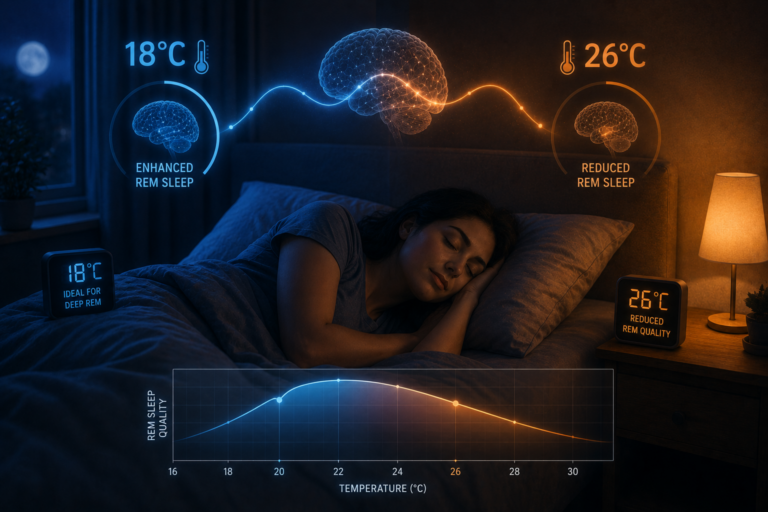
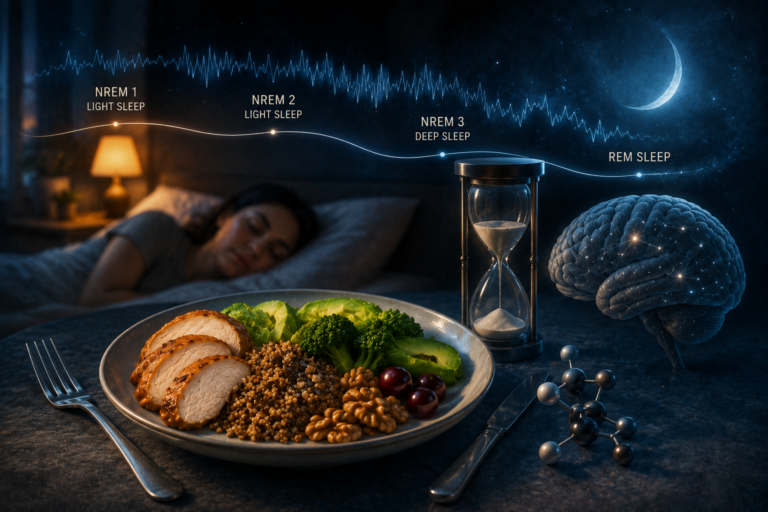
The impact on sleep stages is less studied but emerging. Some research suggests that blue light exposure specifically reduces REM sleep percentage in the first half of the night, with a compensatory rebound later. Deep sleep appears less affected than REM, though the mechanism remains unclear.
Circadian Phase Shifting
The most powerful and well-documented effect of blue light is circadian phase shifting. Morning blue light advances the clock (earlier sleep onset). Evening blue light delays the clock (later sleep onset). This is the basis for light therapy in seasonal affective disorder and circadian rhythm disorders.
The magnitude of phase shift depends on:
- Timing relative to core body temperature minimum: Light before the minimum advances; light after delays
- Intensity and duration: Brighter and longer exposures produce larger shifts
- Consistency: Single exposures produce transient effects; repeated exposures produce stable entrainment
The Mythology Surrounding Blue Light
Several popular claims about blue light lack strong evidence or are actively contradicted by research.
Myth 1: All Screen Time Is Destroying Your Sleep
The blanket statement that screens ruin sleep conflates multiple factors. Screen-related sleep disruption is attributable to:
- Psychological engagement with content (arousal, emotional stimulation)
- Behavioral displacement (delaying bedtime to continue use)
- Posture and physical discomfort
- Light exposure, which is only one component
Studies that control for content and engagement show that the light component alone accounts for a minority of the sleep disruption. A passive e-reader with front lighting at low brightness produces less sleep interference than an emotionally engaging television show, even if the television emits less blue light.
Myth 2: Blue Light Causes Permanent Eye Damage
Claims that blue light from screens damages retinas are not supported by current evidence at typical exposure levels. The International Commission on Non-Ionizing Radiation Protection (ICNIRP) and the American Academy of Ophthalmology both state that screen-emitted blue light does not produce retinal damage under normal use conditions. The intensity from screens is orders of magnitude lower than sunlight, which is the natural and evolutionarily expected blue light source.
Blue light hazard requires extremely high irradiance over extended periods, such as occupational exposure to arc welding or unfiltered high-intensity LEDs. Consumer screens do not approach these levels.
Myth 3: Blue-Blocking Glasses Are Essential for Everyone
The evidence for blue-blocking glasses is mixed and context-specific. A 2023 systematic review in Sleep Medicine Reviews found that:
- Blue-blocking glasses produce modest improvements in sleep onset latency (average 4-7 minutes) in individuals with self-reported sleep difficulties
- Effects are minimal or absent in individuals without baseline sleep complaints
- Amber-tinted lenses (blocking 90%+ of blue light) show stronger effects than clear lenses with blue-filter coatings
- The placebo component is substantial; expectation of benefit influences subjective sleep quality independently of objective change
For most individuals, behavioral changes (reducing evening screen intensity, establishing consistent bedtimes) produce larger effects than glasses alone.
Myth 4: Night Mode and Software Filters Completely Solve the Problem
Device night modes shift screen color temperature toward warmer tones, reducing blue emission. However, the effectiveness is limited:
- Most night modes reduce but do not eliminate blue light emission
- Users often compensate by increasing screen brightness, offsetting the reduction
- The spectral shift does not address the non-light factors of screen use (engagement, displacement)
- Some studies show that even heavily filtered screens at high brightness produce measurable melatonin suppression
Practical Evidence-Based Management
Effective blue light management does not require extreme measures. It requires context-appropriate strategies based on timing, intensity, and individual sensitivity.
Morning: Maximize Blue Light Exposure
The morning period is when blue light is beneficial, not harmful. Deliberate exposure accelerates circadian entrainment, increases alertness, and advances sleep timing for the subsequent night.
- Seek outdoor light within 30 minutes of waking, regardless of weather
- If indoors, position near east-facing windows or use a 10,000 lux light therapy box
- Do not wear blue-blocking glasses in the morning
- Enable maximum screen brightness during morning use if outdoor light is unavailable
Evening: Reduce but Do Not Obsess
The evening period requires reduction, not elimination, of blue light exposure. The goal is to permit natural melatonin onset without creating anxiety-driven rigidity.
🌙 Evening Blue Light Hierarchy
Most Effective: Eliminate screens 90 minutes before bed
Complete removal addresses light, engagement, and displacement simultaneously. This is the single highest-impact intervention.
Moderately Effective: Reduce brightness + enable night mode + maintain distance
If complete elimination is impractical, reduce screen brightness to minimum, enable maximum warm filtering, and increase viewing distance to reduce retinal irradiance.
Supplementary: Amber blue-blocking glasses
Useful for unavoidable evening screen exposure or individuals with high light sensitivity. Choose lenses that block 90%+ of blue light, not cosmetic tints.
Individual Sensitivity Assessment
Not everyone requires the same level of restriction. Self-assessment can guide personalized intensity:
- High sensitivity: You feel wired after evening screen use, have difficulty falling asleep even when tired, or notice delayed sleep onset after bright days. Implement strict evening limits and consider amber glasses.
- Moderate sensitivity: You notice some sleep impact from heavy screen use but not from brief, dim exposure. Focus on reducing intensity and duration rather than complete elimination.
- Low sensitivity: You fall asleep easily regardless of evening screen use. Maintain basic hygiene (avoid maximum brightness in bed) but do not create unnecessary restriction.
Sensitivity can be tested by maintaining a strict no-screen evening for one week and comparing sleep onset latency and subjective quality to your baseline.
Special Populations and Considerations
Certain groups require modified approaches:
- Adolescents: Delayed circadian phase is developmentally normal. Evening blue light restriction may have larger benefits for this group than for adults, but social and academic pressures often make implementation difficult.
- Night shift workers: Blue light management must be inverted. Evening (pre-sleep) exposure should be minimized, but morning exposure after the shift may be beneficial for maintaining some circadian anchoring.
- Individuals with seasonal affective disorder: Morning blue light is therapeutic. Evening restriction remains important, but the morning dose is the primary intervention.
- Post-cataract surgery patients: Removal of the yellowed natural lens increases blue light transmission to the retina. These individuals may show heightened sensitivity to evening light.
Measuring Your Personal Response
Objective self-experimentation provides more useful guidance than generic advice. A simple two-week protocol:
⚠️ Self-Assessment Protocol
<
- Establish baseline: Track sleep onset latency, subjective quality (1-10), and morning grogginess for 3 days with normal habits
- Implement strict evening blue light reduction for 7 days: No screens 90 minutes before bed, dim warm lighting only
- Return to baseline habits for 3 days
- Implement moderate reduction for 7 days: Screens allowed with night mode at minimum brightness
- Compare all conditions. The condition producing the best sleep with acceptable lifestyle fit is your optimal strategy
When to Seek Professional Evaluation
Blue light management is a useful component of sleep hygiene but not a treatment for clinical sleep disorders. Consult a sleep specialist if:
- Sleep onset latency exceeds 30 minutes more than 3 nights weekly despite optimized light management
- Daytime impairment persists despite adequate sleep opportunity
- Symptoms suggest circadian rhythm disorder (extreme morningness or eveningness that does not shift with light management)
- Depression, anxiety, or other conditions complicate sleep independently of environmental factors
Related Articles
- Circadian Rhythm Hacking for Better Deep Sleep Cycles
- How Bedroom Temperature Affects REM Sleep Quality
- Sleep Hygiene’s Direct Impact on Emotional Regulation
- Digital Detox Strategies for Chronic Overthinkers
- Mindfulness Practices Backed by Neuroscience Research
- How Social Media Algorithms Affect Your Mood Patterns
- Journaling Methods That Reduce Stress Hormone Levels
- Boundary Setting: Protecting Mental Energy in Relationships
References and Sources
- Chang, A. M., et al. (2015). Evening use of light-emitting eReaders negatively affects sleep, circadian timing, and next-morning alertness. Proceedings of the National Academy of Sciences, 112(4), 1232-1237. https://doi.org/10.1073/pnas.1418490112
- Gringras, P., et al. (2015). Bigger, brighter, bluer-better? Current light-emitting devices and their influence on circadian physiology and sleep. Progress in Retinal and Eye Research, 48, 123-125.
- Shechter, A., et al. (2018). Blocking nocturnal blue light for insomnia: A randomized controlled trial. Journal of Psychiatric Research, 96, 196-202.
- van der Lely, S., et al. (2015). Blue blocker glasses as a countermeasure for alerting effects of evening light-emitting diode screen exposure in male teenagers. Journal of Adolescent Health, 56(1), 113-119.
- American Academy of Ophthalmology. (2026). Blue Light and Your Eyes: What the Science Says. https://www.aao.org/eye-health/tips-prevention/blue-light
- International Commission on Non-Ionizing Radiation Protection (ICNIRP). (2020). Guidelines on Limits of Exposure to Blue Light.
- Wyse, C. A., et al. (2021). Adolescent sleep patterns and night-time screen use: Results from the UK Millennium Cohort Study. BMJ Open, 11(12), e050676.
- Cheung, I. N., et al. (2016). Morning and Evening Blue-Enriched Light Exposure Alters Metabolic Function in Normal Weight Adults. PLoS ONE, 11(5), e0156225.
Medical Disclaimer: This article is for informational purposes only and does not constitute medical advice. Persistent sleep disturbances despite optimized light management warrant evaluation by a qualified sleep specialist or physician.

Ethan Caldwell is a wellness technology researcher and lifestyle writer focused on the intersection of health, innovation, and everyday wellbeing. He specializes in topics such as fitness technology, sleep optimization, AI-powered nutrition, workplace wellness, and mental health strategies. Through extensive research and analysis of emerging health trends, Ethan creates practical, easy-to-understand content designed to help readers make informed decisions and build healthier daily habits. His goal is to translate complex wellness concepts into actionable guidance for modern living.