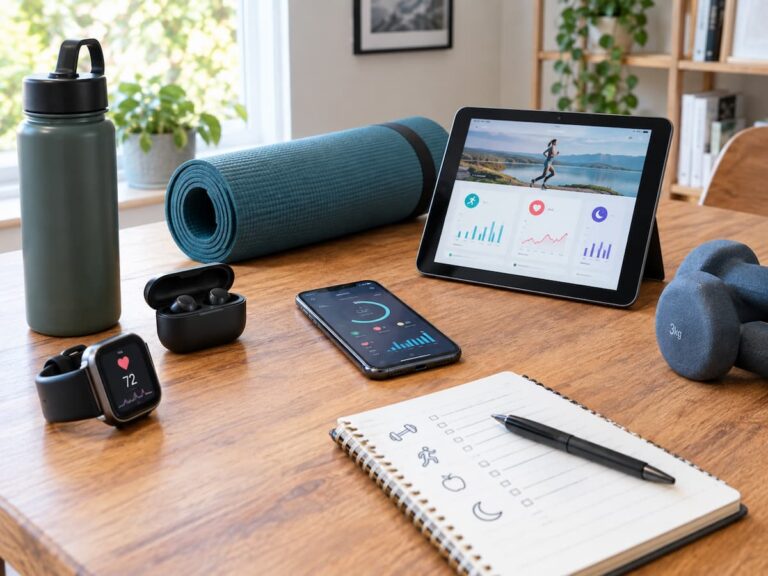

One of the first concerns people ask when they decide to go on a fitness adventure is not how to get healthy, but how much it will cost. Fitness is no longer simply about your gym membership or personal training. Today you may download a fitness app to your phone or hire a physical personal trainer to coach you.
Both options give you better health, more strength, and a more structured workout. But when you add in return on investment (ROI), the situation becomes more complex. In fitness, ROI isn’t just about money. It’s about time, consistency, outcomes, and value in the long run. For many novices, it might be a tough choice between spending money on fitness apps or personal trainers. Others like the guidance of a real being. Others like the flexibility of applications. In this post, we’ll discuss fitness apps vs. physical trainers in detail so you may have a clear understanding of which choice provides greater ROI for your lifestyle and goals.
Return on Investment (ROI) and Fitness Choices
But before we can compare fitness applications to personal trainers, we need to grasp what ROI means in the context of fitness. ROI is, in basic terms, the value you get in return for what you invest. In fitness, this is the money you spend, the time you put in, the work you exert and the benefits you get over time.
The lowest-cost workout solution is not always the best ROI. It’s the choice that keeps you constant, prevents confusion, and gets you to your fitness objectives faster. For instance, a low-cost fitness app may have a poor ROI since it causes irregular sessions and delayed growth. A more costly personal trainer may have a better ROI as he/she keeps you disciplined and focused.
How Fitness Apps Work in the Real World
Fitness applications are hugely popular because they are so easy to obtain and frequently quite inexpensive. Most of the applications include exercise routines, video instruction, progress tracking, calorie monitoring, and even AI recommendations. Fitness apps are awesome since they’re so easy to use. You can exercise whenever you want without a trainer or gym membership. Your fitness plan is right there on your phone, whether you’re at home, at the park, or on the road.
Several applications include organized routines for beginners, weight reduction, muscle growth, or overall fitness. This makes them a suitable starting point for folks who seek straightforward instruction without spending a lot of money. But exercise applications need a lot of self-discipline. The software can help you, but it cannot physically guarantee that you do your workout correctly or consistently.
The Real Benefits of In-Person Personal Trainers
A personal trainer is a human coach who trains people physically one-on-one in a gym or at home. This is a more conventional method of exercise, yet it is still quite helpful for many people. The biggest plus of a physical trainer is accountability. Having someone telling you what to do makes you more likely to remain on track and get your exercises done right.
In addition, personal trainers may correct form as you exercise, which can assist in decreasing confusion and increasing the quality of your workout. You get fast feedback; you don’t have to guess if you are completing an exercise correctly. And trainers may customize workouts to your energy levels, development, and personal demands. This flexibility frequently results in more planned and goal-oriented training. The biggest disadvantage, however, is expense. Fitness applications are a lot cheaper than physical trainers, putting them out of reach for many customers.
Apps vs. Trainers: Cost Breakdown
When comparing exercise applications and personal trainers, the pricing issue is generally the most important one. Fitness applications are usually rather cheap. Some are free with rudimentary functionality and Premium versions might cost a modest monthly fee. This puts them within reach of pretty much everybody with a smartphone.
On the other hand, physical trainers charge per session or monthly packages that can get pricey over time. This might be a huge barrier for anyone on a budget. But value is not based on cost alone. Sometimes a cheaper alternative isn’t a better one if it doesn’t help you stay consistent or get results. So the question is not “Which is cheaper?” but “Which gives better results for your investment?”
Effectiveness: Which One Delivers Better Results?
When it comes to effectiveness, both fitness apps and physical trainers can produce good results—but in different ways. Fitness apps are effective for people who are self-motivated and already understand basic workout principles. They work well for structured routines, general fitness, and simple goal tracking.
However, apps may fall short when users need personalized correction or motivation. Many beginners struggle with form, consistency, and progression when relying only on digital guidance. Physical trainers, on the other hand, provide personalized attention. They can identify mistakes, adjust routines instantly, and keep users motivated throughout the journey. This often leads to faster improvement in technique and consistency. In terms of pure effectiveness, physical trainers often deliver stronger short-term results, especially for beginners. However, fitness apps can be equally effective for long-term users who stay disciplined.
Time Investment and Flexibility
Time is another important factor when calculating ROI in fitness. Fitness apps offer maximum flexibility. You can work out whenever you want without scheduling sessions or traveling. This makes them ideal for people with busy or unpredictable routines.
Physical trainers require scheduled sessions, which may not always align with your daily availability. You also need to spend time commuting if training takes place at a gym or studio. However, structured training sessions can also help some people stay more disciplined. When a fixed time is scheduled, it reduces the chances of skipping workouts. So while apps win in flexibility, trainers win in structured time commitment.
Motivation and Accountability Differences
One of the biggest differences between fitness apps and physical trainers is motivation support. Fitness apps rely on self-motivation. They may include reminders, progress charts, and achievement badges, but ultimately, the user must stay consistent on their own. This works well for highly disciplined individuals but can be challenging for beginners who struggle with consistency.
Physical trainers provide external accountability. Knowing that someone is waiting for you or monitoring your progress can significantly increase commitment levels. Trainers also provide encouragement and emotional support, which helps users push through difficult workouts. For many people, this accountability leads to better long-term fitness habits.
Learning and Skill Development
Fitness is not just about working out—it is also about learning proper techniques and understanding your body. Fitness apps provide instructional videos and basic explanations, which are useful for beginners. However, they cannot always correct subtle mistakes in real time.
Physical trainers offer hands-on guidance. They can immediately correct posture, breathing techniques, and movement patterns. This reduces the risk of developing incorrect habits over time. In terms of learning quality, physical trainers generally provide a deeper and more personalized educational experience.
Long-Term Sustainability
The key to long-term exercise success is consistency and habit creation. Fitness applications are very expandable over time and easy to maintain. They’re cheap and always accessible so customers may use them for years without feeling the squeeze financially.
But without a strong sense of self-discipline, many users fall off applications when the initial motivation wears off. Physical trainers may assist in establishing solid habits at the beginning of a fitness program. Once they’ve established their confidence and habit, users can go to standalone exercises or applications for upkeep. Many individuals find that a mix of the two works best in terms of sustainability.
What’s the Better ROI Overall?
The answer to the question of fitness apps vs. physical trainers depends on what you define by “better ROI.” If ROI is low cost, flexibility, and independence, then fitness apps are a good investment. But they are inexpensive and easy to use, making them perfect for the self-starter.
If ROI means faster progress, accountability, and attention to personal needs, then physical trainers have better value. They can be particularly beneficial for novices or those who have certain fitness objectives in mind. In fact, neither choice is better for everybody. The greatest ROI is generally a combination of the two, starting with a trainer to guide you and then moving to applications for long-term maintenance.
Summary
The fitness apps vs. physical trainers argument isn’t about picking a winner but about discovering what works best with your lifestyle, budget, and fitness objectives. Fitness applications are inexpensive, flexible, and convenient, making them a good option for anyone who wants to learn on their own. Physical trainers provide responsibility, experience, and individualized coaching, which makes them quite successful in helping you make organized development.
Consistency is the most essential driver of fitness ROI. The ideal exercise solution is the one that keeps you moving, inspired, and dedicated over time. Many find the best benefits come from using both methods at different times during their fitness journey and not just sticking with one method for life.
FAQs
1. Are exercise apps superior to personal trainers?
Fitness applications are cheaper and more flexible, but personal trainers provide superior direction and responsibility. Which is better? It depends on your fitness goals and level of discipline.
2. Are exercise apps the ultimate replacement for personal trainers?
Yes, in certain circumstances, especially for experienced users. But novices tend to benefit more from supervision by trainers in person.
3. Are apps or trainers more economical?
It evens out the total value with trainers being able to produce greater outcomes in the short term. Fitness applications are often more cost-effective.
4. Are apps better for beginners than personal trainers?
Yes, personal trainers tend to be more useful for beginners as they can offer correction and organized coaching in real time.
5. Can I mix fitness apps with personal trainers?
Yes, tons of people utilize trainers to get going and apps for upkeep, and it can enhance total fitness ROI.
6. What leads to improved long-term fitness outcomes?
Consistency is the key to long-term outcomes. Fitness apps and trainers may both work if done well, but often times the ideal solution is a blend of both.

Ethan Caldwell is a wellness technology researcher and lifestyle writer focused on the intersection of health, innovation, and everyday wellbeing. He specializes in topics such as fitness technology, sleep optimization, AI-powered nutrition, workplace wellness, and mental health strategies. Through extensive research and analysis of emerging health trends, Ethan creates practical, easy-to-understand content designed to help readers make informed decisions and build healthier daily habits. His goal is to translate complex wellness concepts into actionable guidance for modern living.