
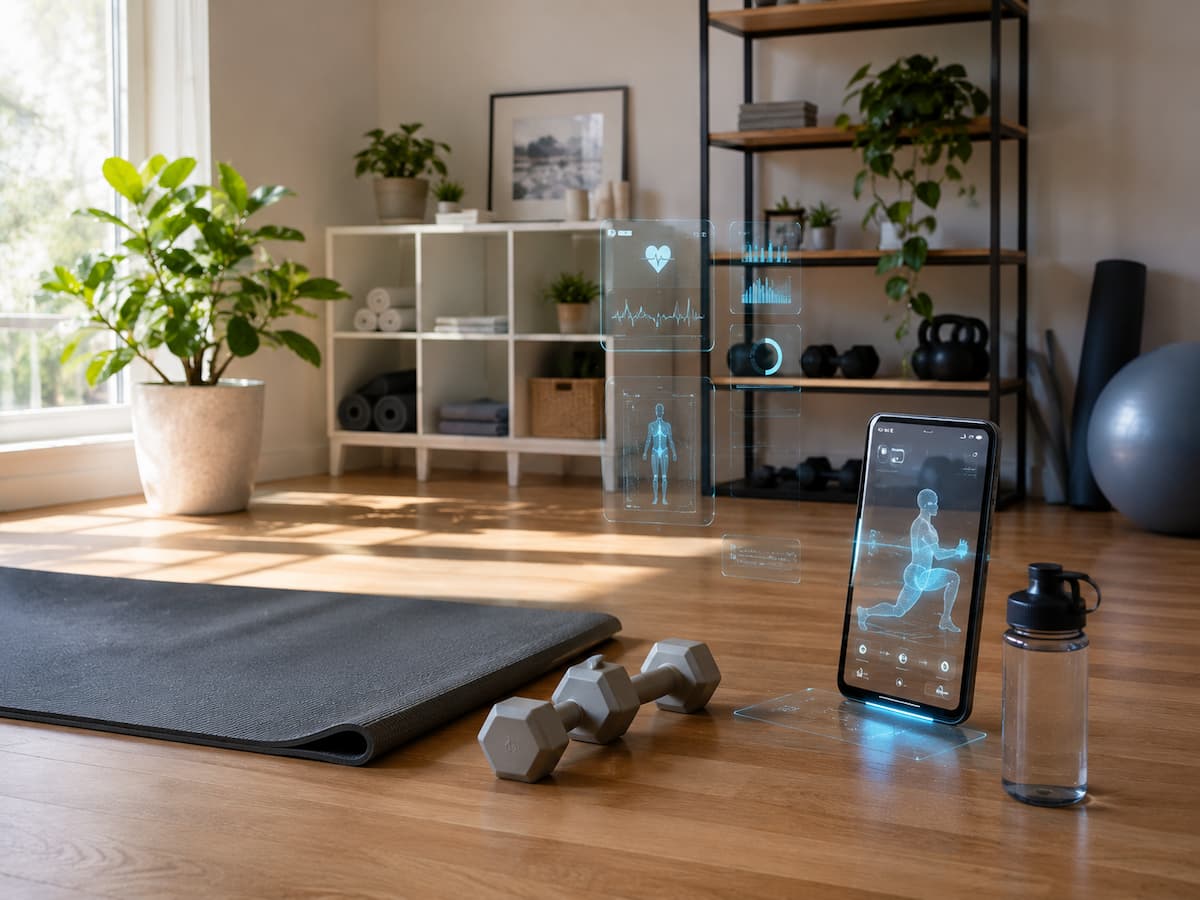
As developers have created new technology, fitness has also evolved. Technology has never stopped impacting the way people exercise, assess their progress, and remain inspired, from basic home workout videos to wearable activity monitors. By superimposing digital data and virtual components onto the physical environment, augmented reality (AR) is revolutionizing the fitness industry.
With augmented reality, you don’t have to sit there and watch a workout on a screen; instead, you can move around as the app provides visual feedback, directions, and advice. For those who struggle to stay motivated during more conventional forms of exercise, this approach might be a welcome change.
The fitness industry’s use of augmented reality is rapidly evolving, so it’s crucial to be aware of the potential advantages and disadvantages. The fundamentals of good movement, regularity, and training are not going away with AR. On the contrary, it is evolving into yet another resource that might assist individuals in developing more regular workout routines. This beginner’s guide to augmented reality (AR) exercises covers the technology’s history, current applications, potential benefits and drawbacks, and what you need to know to get in shape with AR.
Understanding Augmented Reality in Fitness
Augmented reality is a technology that adds digital elements to the real world. Unlike virtual reality, which creates a completely digital environment, augmented reality keeps you connected to your actual surroundings while adding useful information or interactive objects. In fitness, AR can display instructions, movement guidance, progress information, or interactive challenges while a person exercises. The goal is to combine physical activity with digital support.
| Technology | How It Works | Fitness Example |
|---|---|---|
| Traditional workout | Uses physical instructions or videos | Following a recorded exercise class |
| Virtual reality (VR) | Creates a completely digital environment | Exercise inside a virtual world |
| Augmented reality (AR) | Adds digital information to the real environment | Following visual workout guidance in your room |
A simple example of AR fitness would be seeing a digital trainer demonstration appear on your device while you perform exercises in your room. Another example could be visual targets appearing around you during an interactive movement activity. The important idea is that AR does not replace physical activity. It changes how instructions, feedback, and motivation are delivered.
How AR Fitness Differs From Traditional Workouts
Traditional workouts usually depend on instructions from a person, video, written plan, or personal experience. While these methods can be effective, they may not provide enough interaction for people who need additional guidance or motivation. AR introduces a more responsive experience. Instead of simply receiving information, users can interact with digital elements while moving through exercises.
| Traditional Fitness | AR-Based Fitness |
|---|---|
| Instructions are usually separate from exercise | Instructions can appear during activity |
| Progress tracking may require separate tools | Digital feedback can be integrated |
| Often follows a fixed format | Can adapt through interactive features |
| May feel repetitive | Can add challenges and visual interaction |
For beginners, the most significant difference is engagement. Some people find it easier to stay consistent when workouts feel more interactive and less like a routine they have to force themselves to complete.
Why Engagement Matters in Fitness
Building a fitness habit often depends on consistency. A person may understand the importance of exercise but still struggle with motivation, boredom, or uncertainty about what to do. Technology that makes workouts easier to follow can remove some common barriers. AR does this job by creating additional guidance and interaction, although personal commitment remains the most important factor.
The Technology Behind AR Fitness Experiences
Augmented reality fitness depends on several technologies working together. The experience may look simple from the user’s perspective, but many systems combine cameras, sensors, software, and motion tracking to create accurate interactions.
Main Components of AR Fitness Systems
| Component | Purpose |
|---|---|
| Camera sensors | Help understand the surrounding environment |
| Motion tracking | Detect body movement and position |
| Software algorithms | Processes information and creates digital responses |
| Display devices | Shows digital information to the user |
Some AR fitness experiences use smartphones or tablets, while others may use specialized wearable devices. The type of hardware affects how immersive and accurate the experience can be.
Motion Tracking and Exercise Feedback
One of the most interesting parts of AR fitness is movement recognition. Some systems can analyze body position and provide feedback about exercise form. For beginners, this type of guidance can be useful because many people struggle to know whether they are performing movements correctly. However, technology should not be considered a complete replacement for professional instruction when someone has specific training needs.
How Augmented Reality Is Being Used in Fitness
Augmented reality is being explored across different areas of fitness. Its purpose is not limited to one type of exercise. Instead, developers are creating experiences that support different activities and learning styles.
Interactive Workout Guidance: AR can provide visual instructions during workouts. Instead of stopping an exercise to check instructions, users may receive guidance while continuing movement. This can be especially helpful for beginners who are learning new exercises and need reminders about technique or timing.
Fitness Games and Challenges: Some AR fitness experiences use game-like features to make movement more enjoyable. Users may complete challenges, interact with digital objects, or track achievements. These features can make exercise feel less repetitive by adding an element of exploration and interaction.
Sports Training: AR is also being explored for sports practice. Athletes can use digital information to improve reaction time, practice movements, or understand performance data.
How AR Can Improve Workout Motivation
Motivation is one of the greatest challenges in maintaining a regular fitness routine. Many people start exercise programs with enthusiasm but struggle when workouts become repetitive or progress feels slow. Augmented reality can help by making exercise more engaging. Interactive elements, progress feedback, and visual goals can create a stronger connection between effort and results.
Ways AR May Support Motivation
- Makes workouts more interactive
- Provides visible progress information
- Adds challenges and goals
- Creates a more engaging experience
However, motivation should not depend completely on technology. A person who does not enjoy the activity itself may still struggle, even with advanced tools.
Using AR for Exercise Guidance and Learning
Learning new exercises can be challenging, especially for beginners who are unfamiliar with proper movement patterns. Many people pause workout videos repeatedly or search for additional explanations because they are unsure if they are performing an exercise correctly.
Augmented reality aims to make this learning process more interactive. Instead of watching a demonstration and trying to remember each step, users can receive visual guidance while they are moving. Digital overlays, movement indicators, and real-time instructions can help people understand exercise sequences more naturally.
Ways AR Supports Learning
| Feature | Benefit |
|---|---|
| Step-by-step guidance | Makes new exercises easier to learn |
| Visual movement cues | Helps users understand body positioning |
| Progress indicators | Shows workout completion and milestones |
| Interactive instructions | Reduces the need to stop and replay videos |
Although these features can improve the learning experience, they should not replace professional coaching for advanced training or rehabilitation. AR is best viewed as an educational tool that supports, rather than replaces, proper instruction.
The Growth of AR Home Fitness
Home fitness has become increasingly popular because it offers convenience and flexibility. Augmented reality adds another layer by making home workouts feel more interactive without requiring a traditional gym environment. Instead of following a standard exercise video, users can interact with digital instructions, complete movement challenges, or receive feedback while exercising in their own space.
Advantages of AR at Home
- No need to travel to a fitness center.
- Can make solo workouts feel more engaging.
- Supports flexible workout schedules.
- Encourages regular movement through interactive experiences.
However, users should ensure they have enough clear space around them before starting any AR workout. Furniture, loose objects, or limited room can increase the risk of accidents during movement.
Benefits of Augmented Reality Fitness
Augmented reality offers several potential benefits, particularly for people who enjoy interactive learning or need additional motivation to stay active. While it is not essential for a successful fitness routine, it can improve the overall workout experience for many users.
| Benefit | How It Helps |
|---|---|
| Higher engagement | Interactive experiences can reduce boredom. |
| Visual guidance | Supports understanding of exercise movements. |
| Progress tracking | Makes improvements easier to monitor. |
| Flexible workouts | Allows exercise in different locations. |
| Learning support | Helps beginners build confidence. |
Who May Benefit Most?
AR fitness may be particularly helpful for beginners, people who enjoy technology-based learning, individuals exercising at home, and users looking for more engaging workout experiences. At the same time, experienced athletes may find value in AR as a supplementary training tool rather than a complete replacement for traditional coaching or structured programs.
Limitations and Challenges of AR Fitness
Despite its potential, augmented reality is not a perfect solution. Like any technology, it has limitations that users should understand before relying on it for fitness.
Technology Requirements: AR experiences often depend on compatible devices, cameras, sensors, and sufficient processing power. Older devices may not provide the same performance as newer hardware.
Environmental Factors: Lighting conditions, available space, and room layout can affect how well AR systems function. A cluttered environment may reduce tracking accuracy or create safety concerns.
The Future of Augmented Reality Fitness
As mobile devices, wearable technology, and software continue to improve, augmented reality is expected to become more capable and accessible. Developers are exploring new ways to combine movement tracking, personalized guidance, and interactive learning. Future systems may offer more detailed exercise feedback, improved environmental awareness, and better integration with wearable fitness devices. At the same time, these developments will depend on advances in hardware, software, and user adoption.
Possible Areas of Growth
- More accurate movement recognition.
- Personalized workout recommendations.
- Better integration with smart wearables.
- Expanded educational fitness experiences.
- Improved accessibility for home users.
While the technology continues to evolve, the core principles of fitness remain unchanged. Consistency, proper technique, balanced routines, and gradual progress will always be more important than the technology itself.
Beginner Tips for Trying AR Fitness
If you are interested in exploring augmented reality fitness, starting with simple expectations is often the best approach. The goal is to learn how the technology fits into your routine rather than expecting it to transform your fitness overnight.
Practical Tips
| Recommendation | Reason |
|---|---|
| Start with beginner workouts | Build confidence before trying advanced sessions. |
| Keep enough open space | Improves safety during movement. |
| Follow proper exercise techniques | Technology supports learning but does not replace good form. |
| Take regular breaks | Helps prevent unnecessary fatigue. |
| Review progress regularly | Supports long-term consistency. |
Remember that the best fitness routine is the one you can maintain over time. AR should support your habits rather than become the only reason you stay active.
FAQs
1. What constitutes augmented reality fitness?
Augmented reality fitness integrates physical activity with digital data presented in the tangible environment. Rather than establishing an entirely virtual setting, augmented reality incorporates visual cues, directives, or interactive components to enhance exercise routines while users maintain awareness of their environment.
2. Is augmented reality identical to virtual reality?
No. Virtual reality immerses users in a completely digital realm through the use of specialized headgear, whereas augmented reality superimposes digital elements over the physical surroundings. Both technologies can enhance fitness, although they offer distinct experiences.
3. Is augmented reality fitness accessible for novices?
Affirmative. Numerous augmented reality exercise activities are tailored for novices. Interactive coaching and visual instructions facilitate the learning of fundamental exercises; however, novices must prioritize correct technique and safe movement.
4. Is specialized equipment required for augmented reality fitness?
The apparatus needed is contingent upon the particular application. Certain augmented reality experiences function on compatible smartphones or tablets, while others rely on wearable technology or specialized equipment. Consistently verify the prerequisites before commencing.
5. Does augmented reality enhance exercise outcomes?
Augmented reality can enhance participation and offer valuable direction, although it does not ensure superior fitness outcomes. Advancement is contingent upon regular physical activity, nutritious eating, recuperation, and adherence to a suitable training regimen.
6. Is augmented reality fitness secure?
Augmented reality fitness can be secure when utilized judiciously. Individuals must engage in physical activity in a distinctly illuminated space, adhere to guidelines meticulously, and maintain vigilance regarding their environment. If you possess a medical ailment or injury, consult a certified healthcare practitioner prior to initiating a new workout regimen.
Conclusion
Augmented reality is transforming fitness by rendering routines more interactive, captivating, and attainable. Rather than supplanting conventional exercise, it incorporates digital instruction and immediate feedback that can assist individuals in mastering exercises, maintaining motivation, and experiencing a more engaging environment.
Similar to any fitness technology, augmented reality is most effective when paired with attainable objectives, regular commitment, and safe workout methodologies. Although technology is always advancing, its fundamental benefit is in fostering healthy behaviors instead of supplanting the essentials of physical exercise. Regardless of your familiarity with exercise or your interest in novel fitness technology, comprehending the mechanics of augmented reality can assist you in determining its alignment with your individual objectives and training preferences.
References
- World Health Organization (WHO) – Physical Activity Guidelines.
- American College of Sports Medicine (ACSM) – Exercise recommendations and fitness guidance.
- National Institutes of Health (NIH) – Research on digital health technologies and physical activity.
- IEEE Xplore Digital Library – Publications on augmented reality applications.
- ACM Digital Library – Human-computer interaction and augmented reality research.
- International Society for Technology in Education (ISTE) – Educational technology resources.

Ethan Caldwell is a wellness technology researcher and lifestyle writer focused on the intersection of health, innovation, and everyday wellbeing. He specializes in topics such as fitness technology, sleep optimization, AI-powered nutrition, workplace wellness, and mental health strategies. Through extensive research and analysis of emerging health trends, Ethan creates practical, easy-to-understand content designed to help readers make informed decisions and build healthier daily habits. His goal is to translate complex wellness concepts into actionable guidance for modern living.